Sign In
Create Account
SUBJECTS
Illustration
113,158
Landscape
58,247
Figurative
55,884
Drawings
46,189
Prints
23,048
Posters
21,754
Plants & Animals
21,568
Flowers
18,463
Religion
13,787
Portraits
13,625
Paintings
6,584
Abstract
6,235
MOVEMENTS
Art Deco
47,754
Expressionism
47,497
Impressionism
42,533
Art Nouveau
37,662
Neoclassicism
33,488
Romanticism
30,798
Realism
29,401
Baroque
14,247
Academic
12,692
Renaissance
7,965
Rococo
7,212
Japanese (culture or style)
5,202
CULTURE
French
33,463
American
24,256
English
20,534
German
18,291
Dutch
14,379
Italian
12,099
Japan
9,652
Belgian
9,004
Polish
6,981
Austrian
6,865
France
5,477
Japanese
3,726
TOPICS
Advertising
666
Allegory
125
Animals
19,261
Architecture
429
Asian Art
7,729
Beach
158
Birds
52
Books & Magazines
918
Botanical
18,384
Bridges
202
Canals
123
Cattle
6
COLLECTIONS
Impressionist Masterpieces
42,526
Renaissance Treasures
7,965
Abstract Expressions
6,235
Landscapes & Nature
58,248
Botanical Illustrations
18,504
Art Nouveau Collection
37,661
Mythology & Legends
1,716
Japanese Woodblock Prints
3,779
Beverage Posters
228
Pictorial cartography
33
American History
1,664
Portrait Lithographs
656
ARTISTS
HOME
>
SUBJECTS
>
PRINTS
Prints Wall Art
WALL ART
23,095 artworks
FILTER BY
SHAPE
All Shapes
Portrait
13,606
Landscape
9,489
STYLES
All Styles
Japanese (culture or style)
5,127
Edo period (1615–1868)
2,980
19th century
759
Meiji period (1868–1912)
171
Pictorialism
21
Qing dynasty (1644–1911)
15
edo (japanese period)
13
Modern period
6
Ming dynasty (1368–1644)
5
Taishō period (1912–26)
4
indonesian
4
Neoclassicism
4
Edo (1615–1868)
2
Qing dynasty (1644–1911), Kangxi period (1662–1722)
2
Realism
1
Edo period (1615–1868)Vertical ōban;
1
Joseon dynasty (1392–1910)
1
meiji
1
Meiji (1868–1912) or Taishō (1912–26) period
1
early Meiji period (1868–1912)
1
Arts and Crafts Movement
1
18th Century
1
Art Nouveau
1
Post-Impressionism
1
21st Century
1
Qing dynasty (1644-1911) or modern period
1
Qing dynasty (1644–1911) or modern period, 19th or 20th century
1
empire
1
Heian period (794–1185)
1
Five Dynasties period (907–960)
1
Himalayan
1
ARTISTS
All Artists
Utagawa Hiroshige
1,605
Katsushika Hokusai
532
Katsukawa Shunsho
492
Honoré-Victorin Daumier
487
James McNeill Whistler
416
Suzuki Harunobu
402
Kitagawa Utamaro
397
Henri de Toulouse-Lautrec
363
Torii Kiyonaga
330
Tsukioka Kôgyo
329
Jacques Callot
260
Unknown
249
Francisco José de Goya y Lucientes
242
Katsukawa Shunshō 勝川春章
228
José Guadalupe Posada
222
Hendrick Goltzius
208
Odilon Redon
207
Isoda Koryusai
189
Utagawa Kuniyoshi
185
Charles Émile Jacque
184
SORT: NEWEST
Newest First
Oldest First
A — Z
Z — A
1,554
WALL ART
Landscape
Japanese (culture or style)
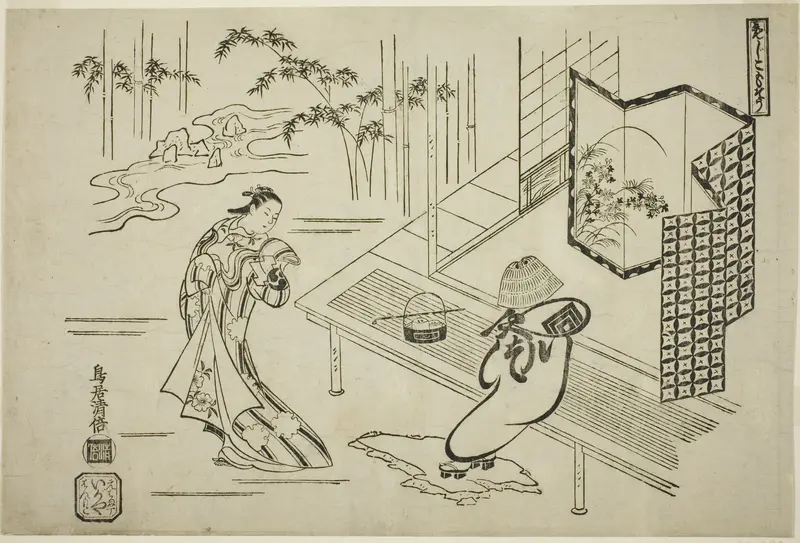
Two Actors in a Drama
Torii Kiyomasu I
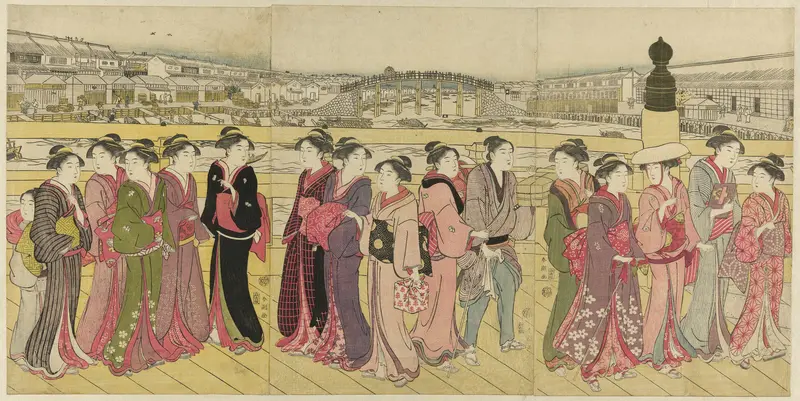
Crossing Nihonbashi Bridge
Katsukawa Shunchô
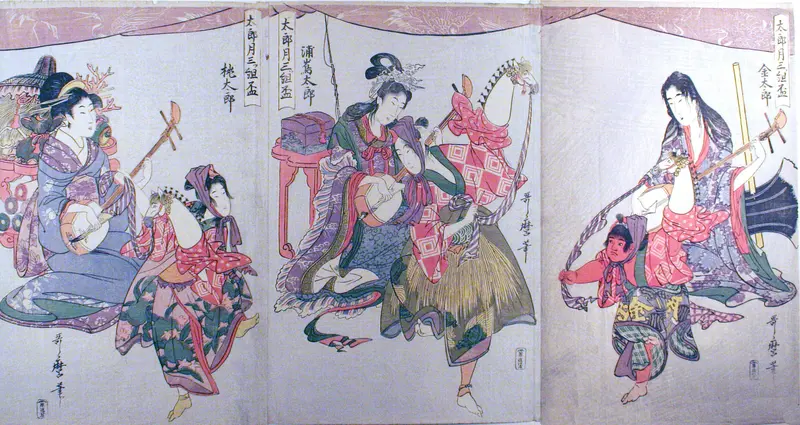
Kintaro, Urashimataro, and Momotaro, from the triptych "Set of Three Sake Cups for the First Month (Tarozuki mitsugumi sakazuki)"
Kitagawa Utamaro
Mount Goten, from the illustrated book "Statue of Fugen (Fugen-zo)"
Kitagawa Utamaro
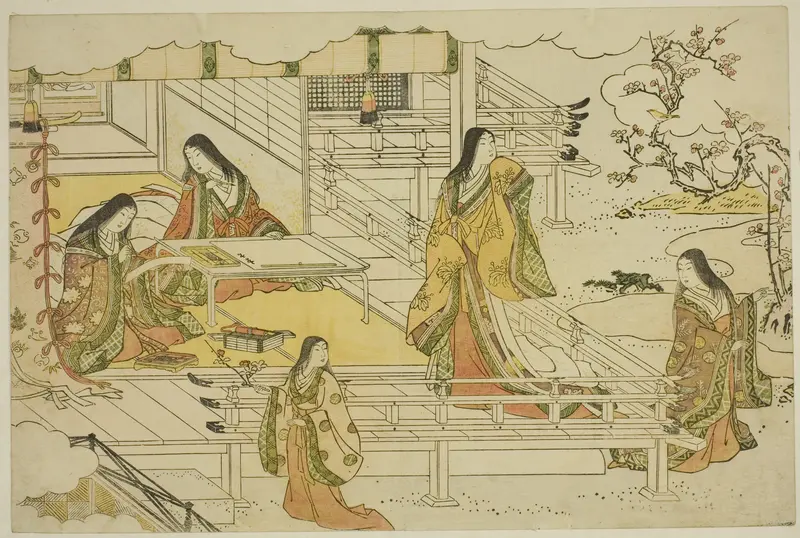
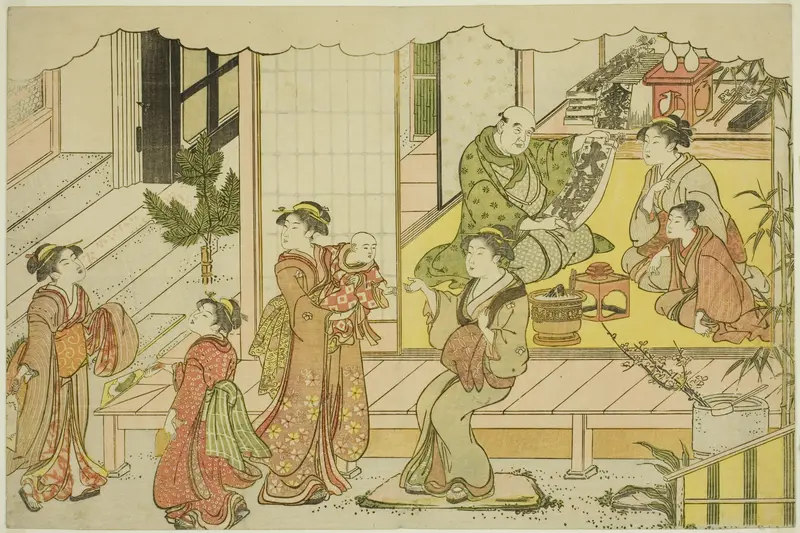
The First Calligraphy of the New Year (Kissho hajime), from the illustrated book "Colors of the Triple Dawn (Saishiki mitsu no asa)"
Torii Kiyonaga
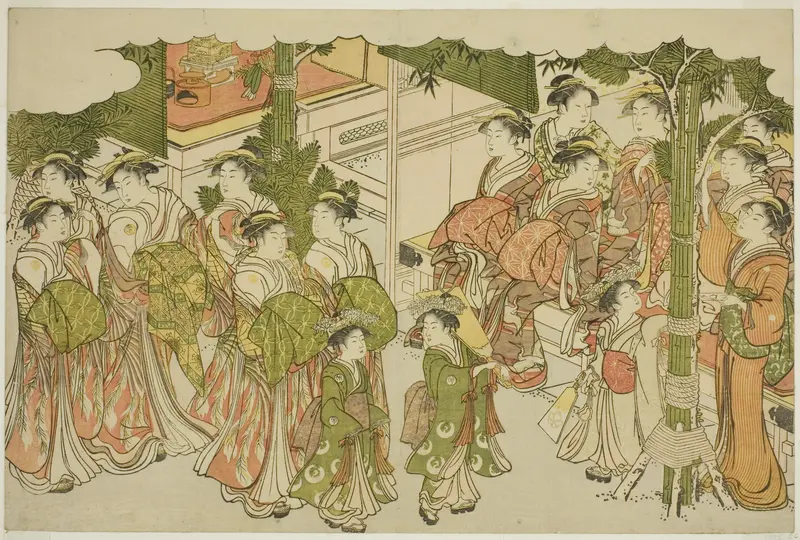
The First Garments of the New Year (Kiso hajime), from the illustrated book "Colors of the Triple Dawn (Saishiki mitsu no asa)"
Torii Kiyonaga
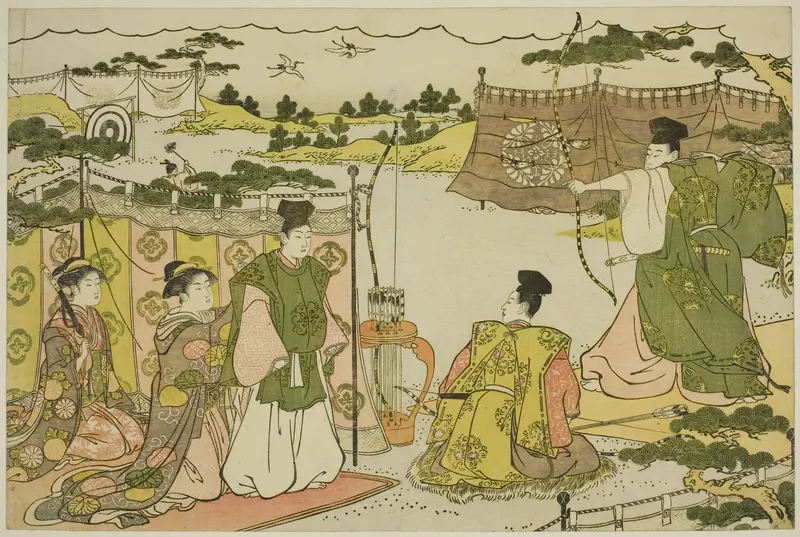
The First Archery Practice of the New Year (Yumi hajime), from the illustrated book "Colors of the Triple Dawn (Saishiki mitsu no asa)"
Torii Kiyonaga
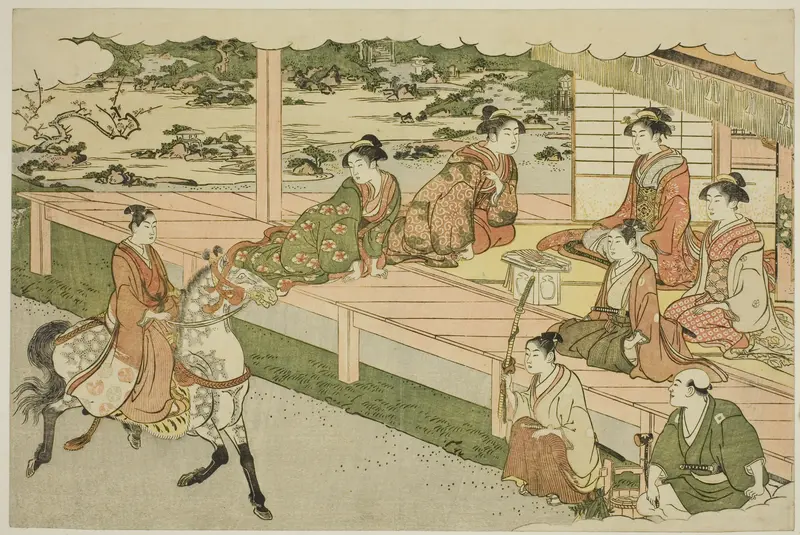
The First Horseback Ride of the New Year (Uma norizome), from the illustrated book "Colors of the Triple Dawn (Saishiki mitsu no asa)"
Torii Kiyonaga
Opening the Storehouse (Kurabiraki), from the illustrated book "Colors of the Triple Dawn (Saishiki mitsu no asa)"
Torii Kiyonaga
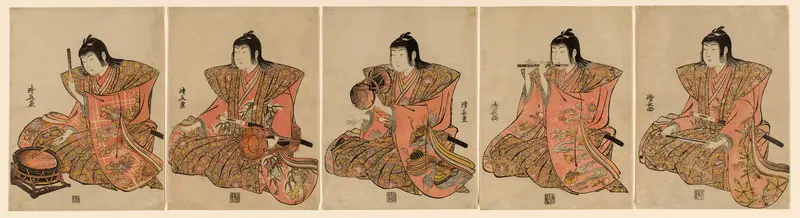
Five Musicians (Gonin bayashi)
Torii Kiyonaga
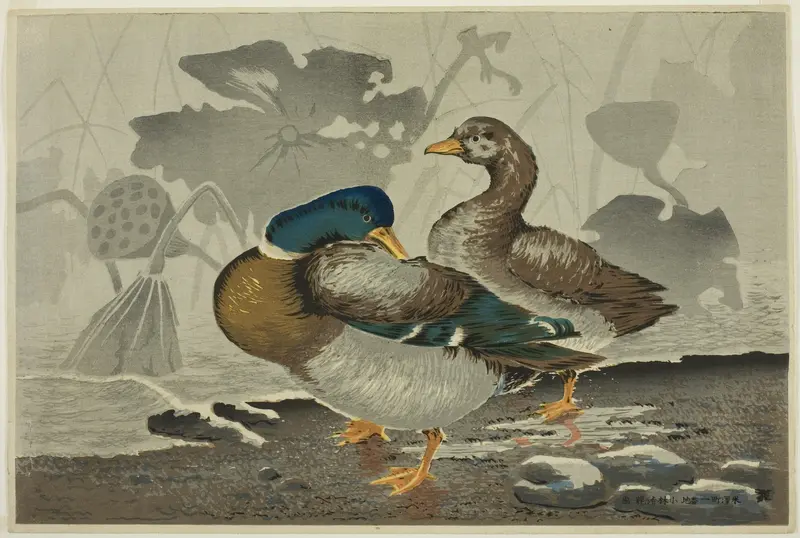
A pair of ducks by a lotus pond
Kobayashi Kiyochika
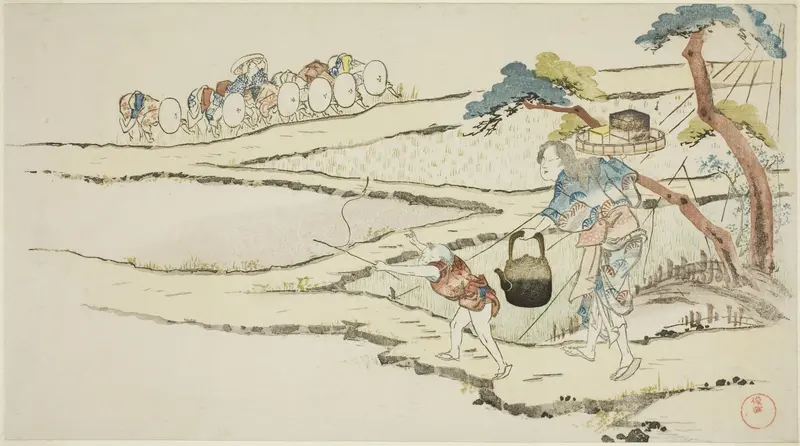
Taking Food to Rice Planters
Kubo Shunman
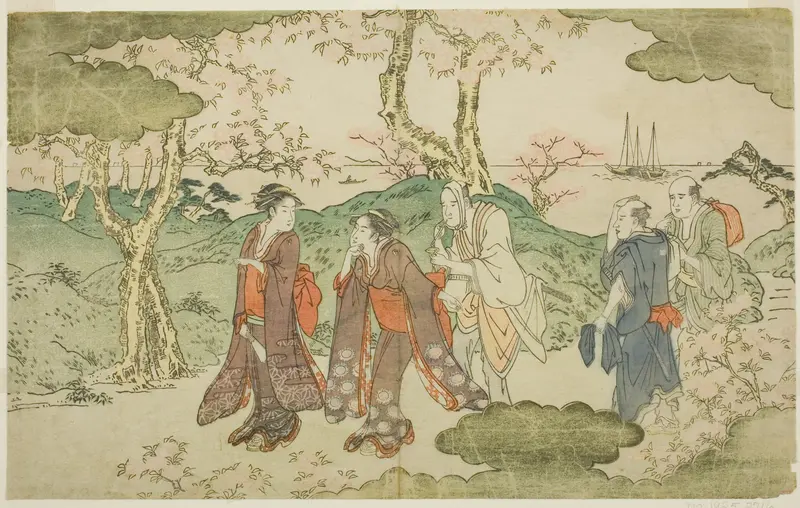
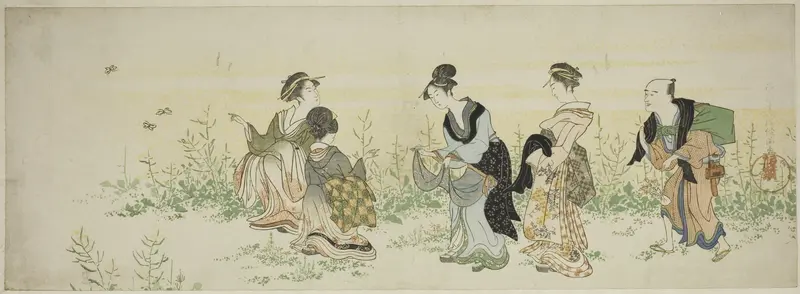
Gathering spring flowers
Kubo Shunman
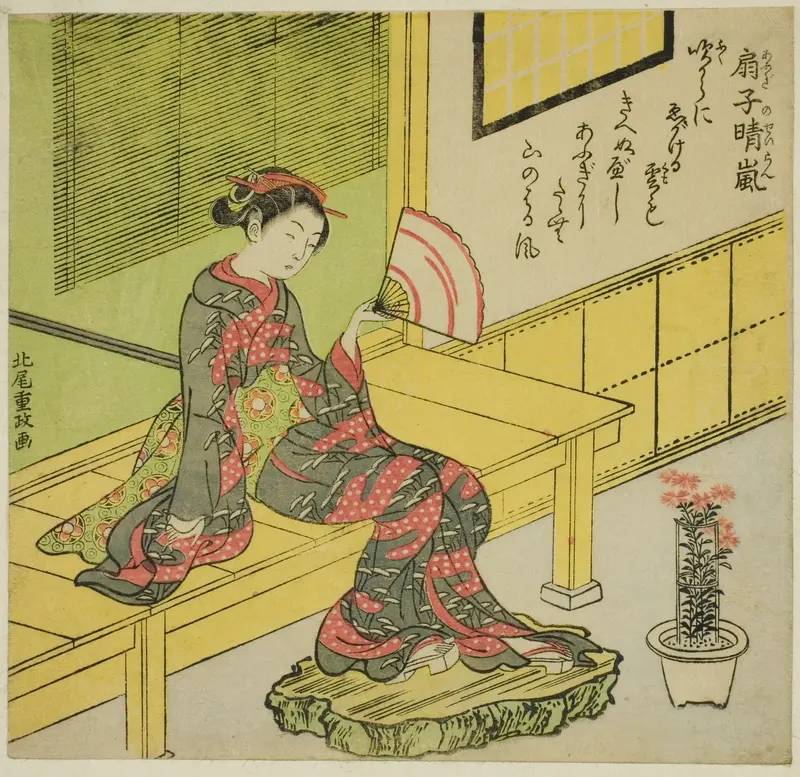
Clearing Breeze from a Fan (Ogi no seiran)
Kitao Shigemasa
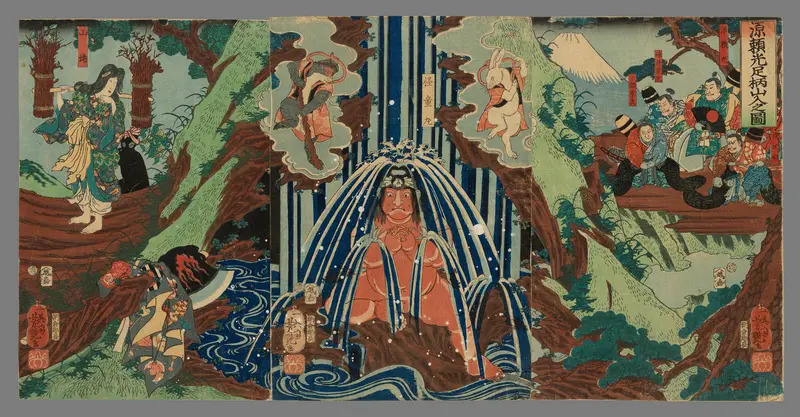
Minamoto Yorimitsu in Mount Ashigara (Minomoto Yorimitsu Ashigarayama iri no zu)
Ichieisai Yoshitsuya
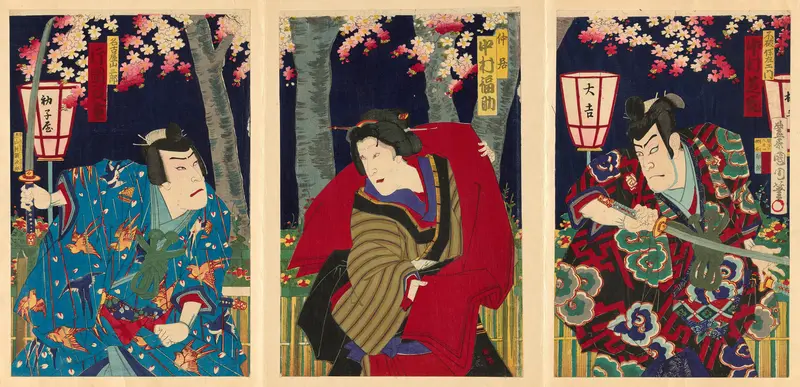
The actors Nakamura Shikan IV as Fuwa Banzaemon, Nakamura Fukusuke IV as the Maid, and Kataoka Gado III as Nagoya Sanzaburo
Toyohara Kunichika
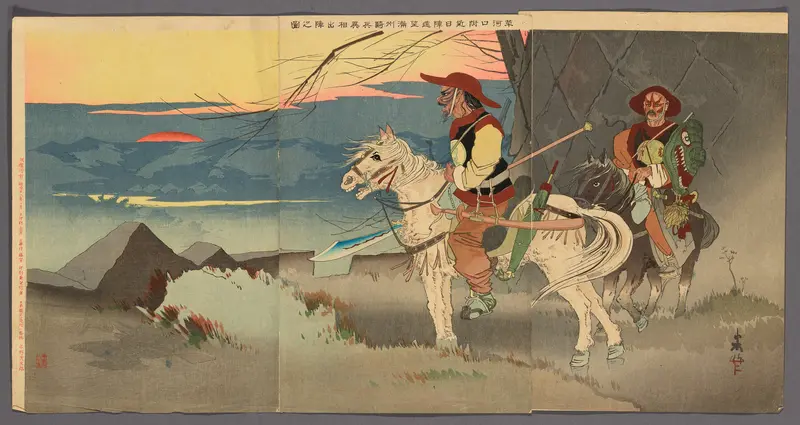
Manchurian Horsemen Scouting from a Distance the Japanese Camp Near Sauhoku (Sokako fukin Nichijin enbo Manshu kihei iso shutsujin no zu)
Taguchi Beisaku
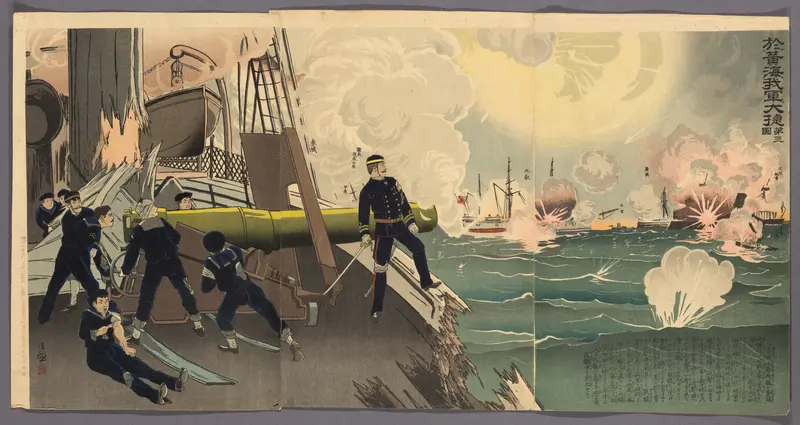
Third Illustration of the Great Victory of Our Forces on the Yellow Sea (Kokai ni okeru wagagun no taisho, dai san zu)
Kobayashi Kiyochika
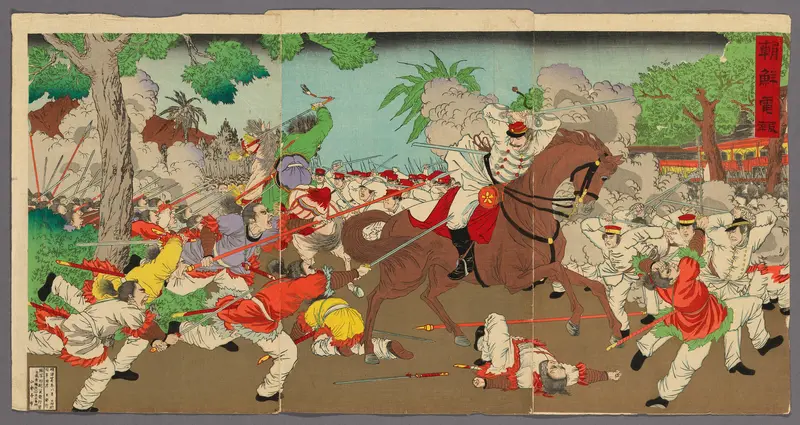
Telegram from Korea (Chosen denpo)
Unknown
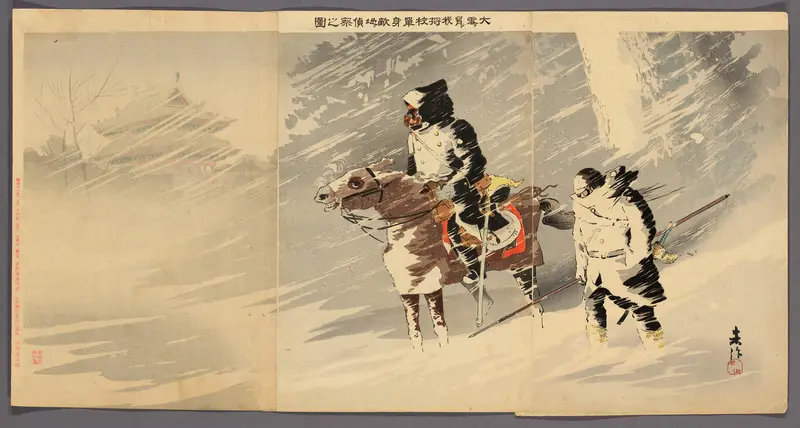
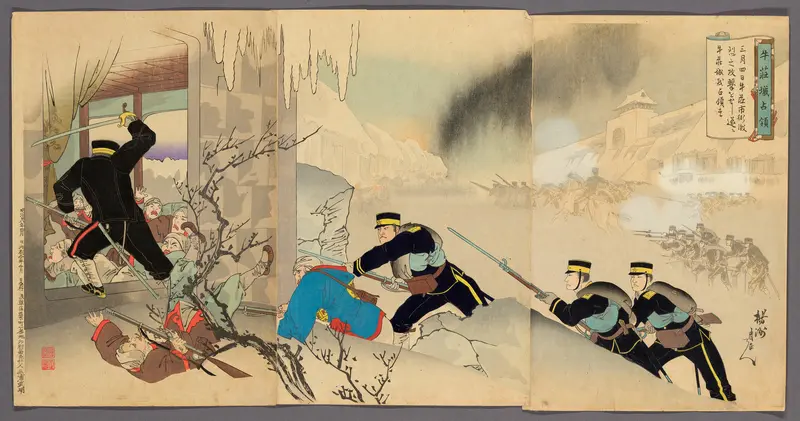
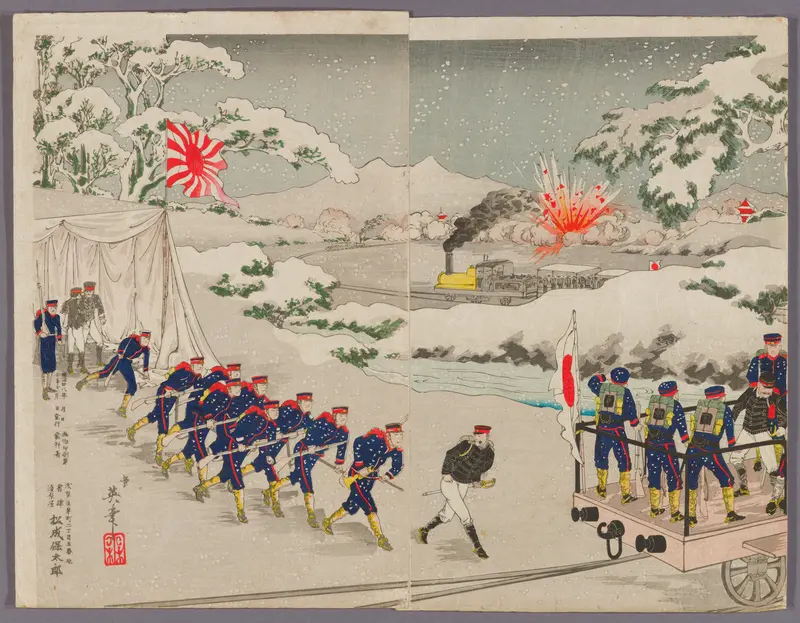
Our Officers Scouting the Enemy Camp in a Snow Storm (Oyuki o okashite waga shoko tanshin tekichi o teisatsu no zu)
Taguchi Beisaku
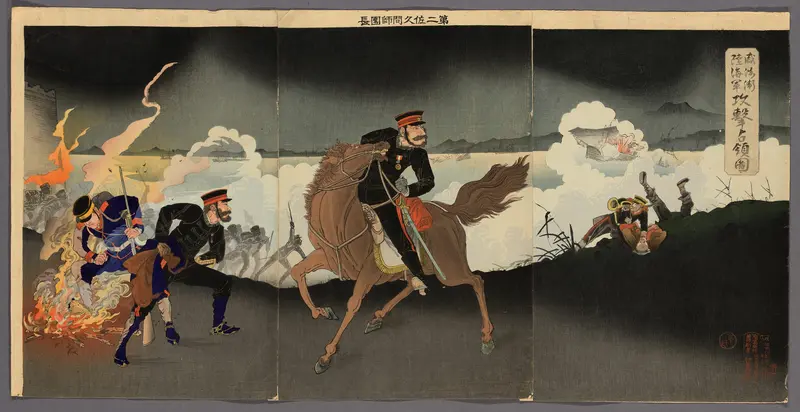
The Army and Navy Attack and Capture Weihaiwei (Ikaiei rikukaigun kogeki senryo zu)
Kobayashi Ikuhide
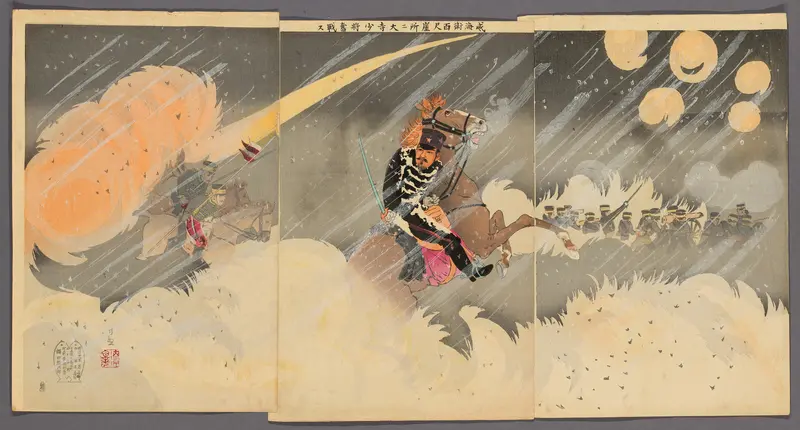
Major General Odera Fighting Fiercely at the Hundred Foot Cliff in Weihaiwei (Ikaiei hyakusekigaisho ni Odera shosho funsen su)
Kobayashi Kiyochika
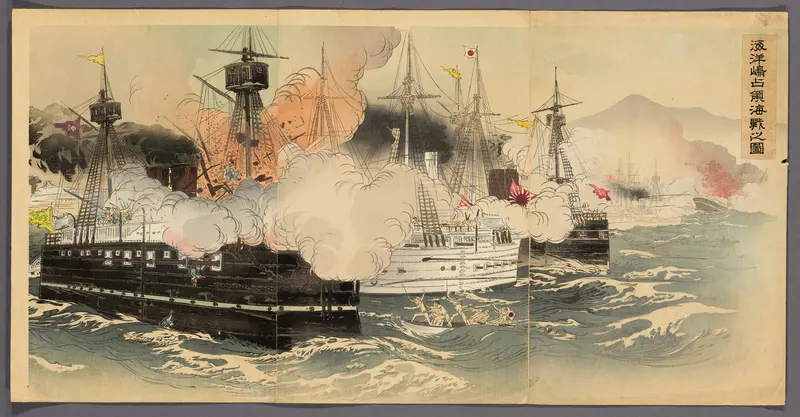
The Naval Battle and Capture of Haiyang Island (Kaiyoto senryo kaisen no zu)
Ogata Gekko
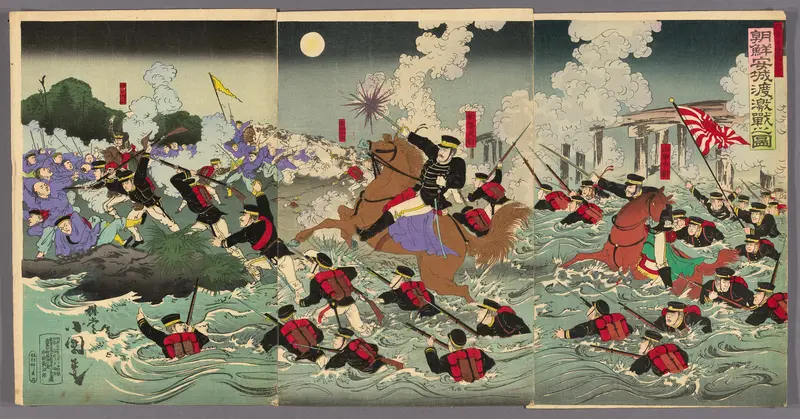
Fierce Fighting at Anseong Crossing in Korea (Chosen Anjo watashi no gekisen no zu)
Utagawa Kokunimasa
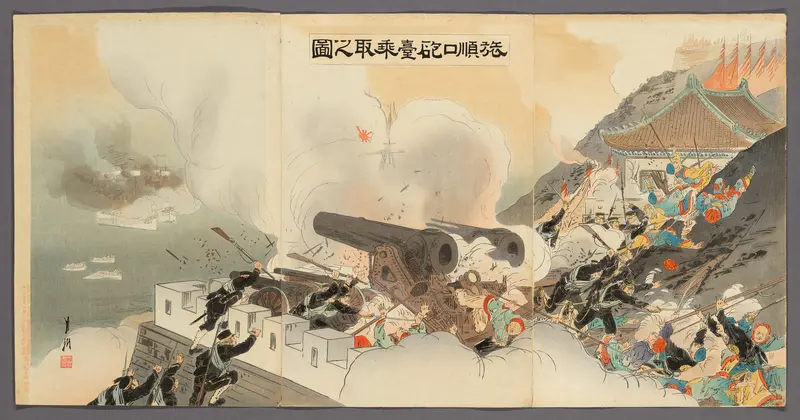
The Occupation of the Battery at Port Arthur (Ryojunko hodai nottori no zu)
Ogata Gekko
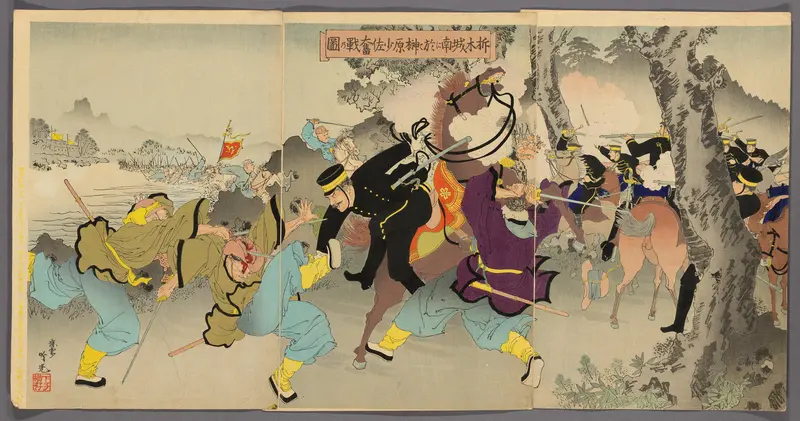
Lieutenant Commander Sakakibara Fighting Bravely to the South of Ximucheng (Takubokujo nan ni oite Sakakibara shosa funsen no zu)
Adachi Ginko
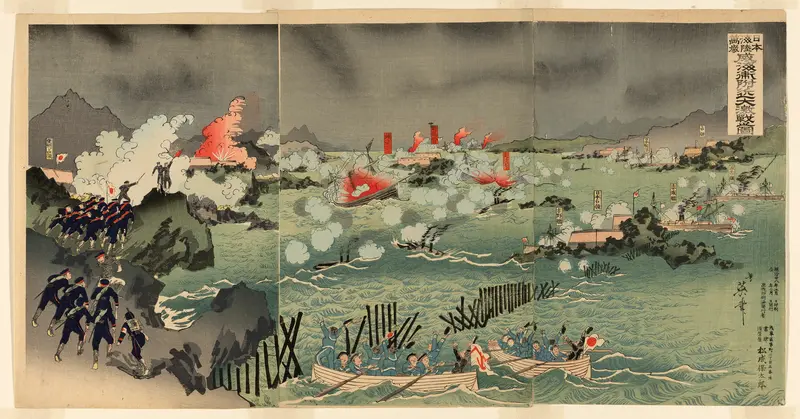
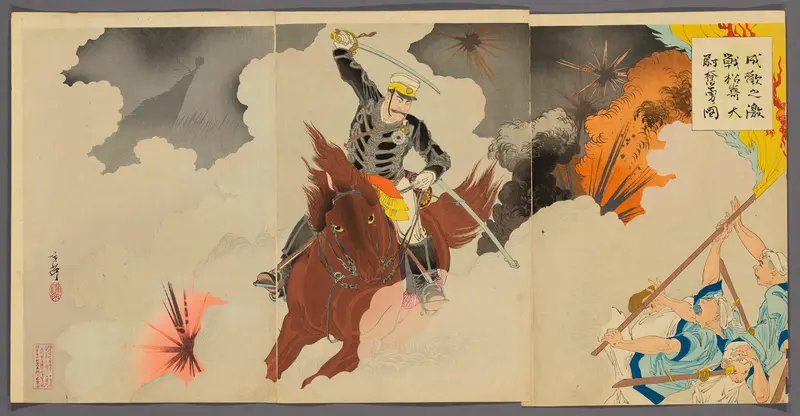
Long Live the Japanese Navy and Army! The Great Battle near Weihaiwei (Nihon kairiku banzai, Ikaiei fukin daigekisen no zu)
Kobayashi Ikuhide
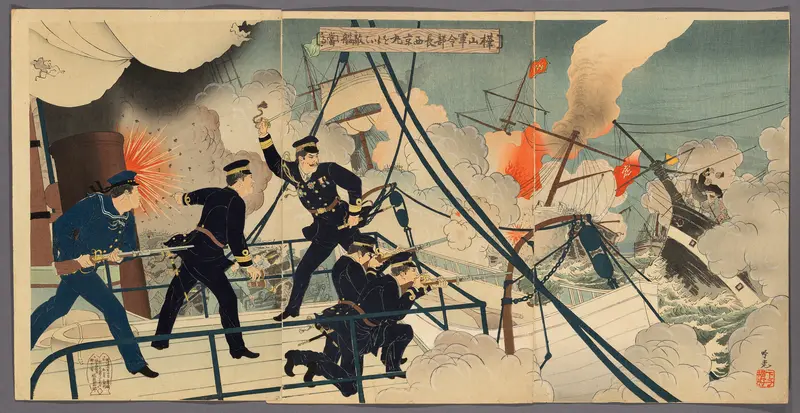
Kabayama, the Chief of Naval Staff, Attacking Enemy Ships from onboard Saikyomaru (Kabayama gunreibucho Saikyomaru o motte tekikan ni ataru)
Adachi Ginko
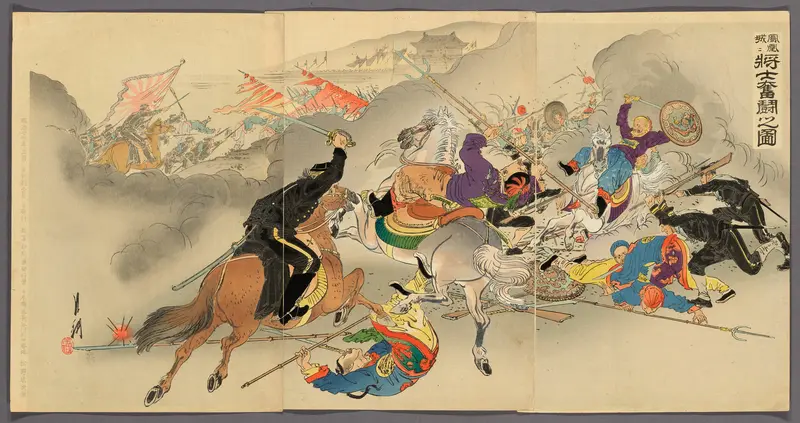
Soldiers Fighting Furiously at Fenghuangcheng (Hoojo ni shoshi funto no zu)
Ogata Gekko
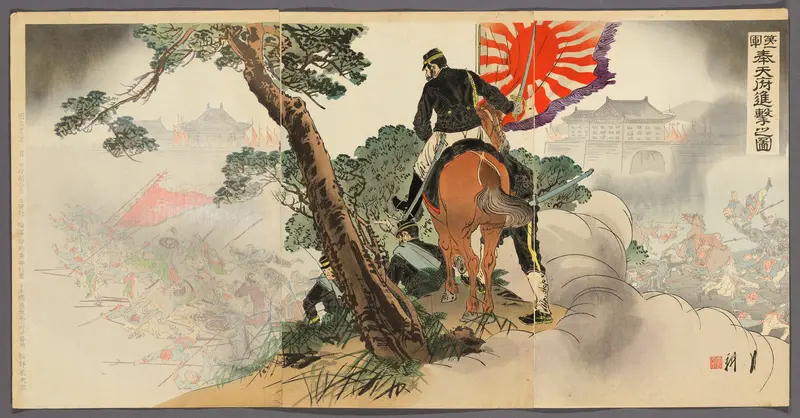
The First Division Advancing on Fengtienfu (Daiichigun Hotenfu shingeki no zu)
Ogata Gekko
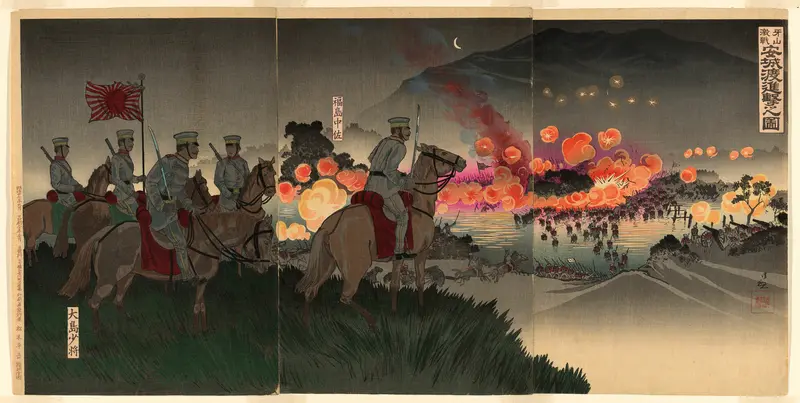
Advancing across the Ansong River at the Battle of Asan (Gazan gekisen Anjo no watashi shingeki no zu)
Kobayashi Kiyochika
Captain Matsuzaki Bravely Fights at the Great Battle of Songhwan (Seikan no Gekissen, Matsuzaki Taii funyu no zu)
Migita Toshihide
Capturing the Fortress at Niuzhuang (Gyusojo senryo)
Hashimoto (Yoshu) Chikanobu
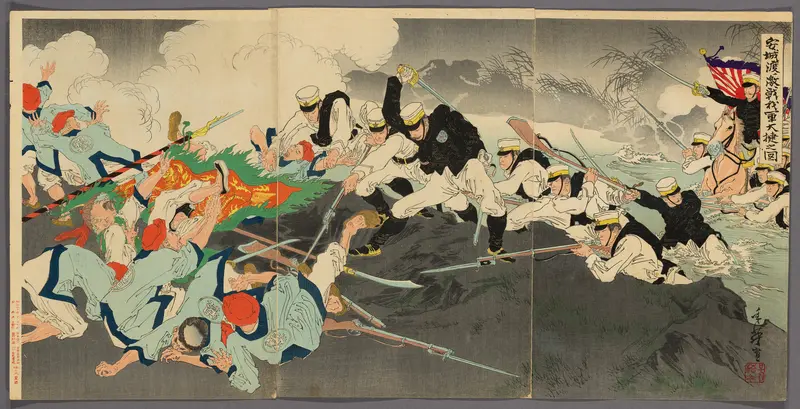
Great Victory of Our Troops at the Fierce Battle of the Ansong Ford (Anjo no watashi waga gun taisho no zu)
Migita Toshihide
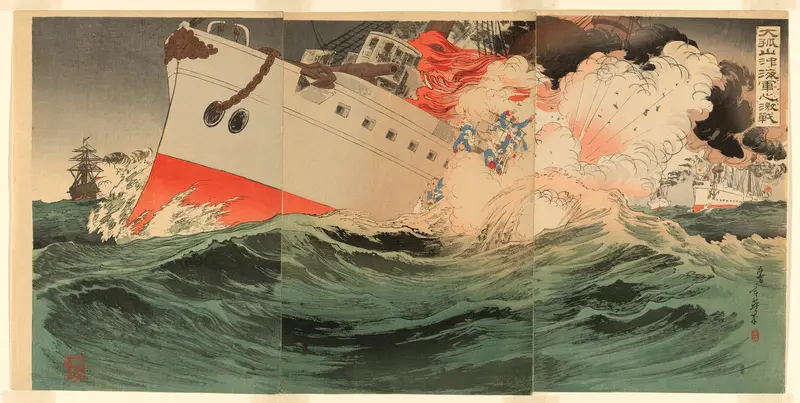
Fierce Naval Battle Off Takushan (Daikosan oki kaigun no gekisen)
Migita Toshihide
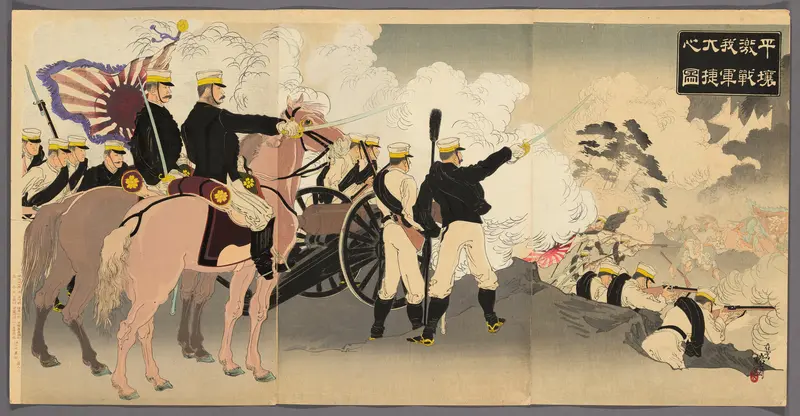
Great Victory of Our Forces at the Battle of Pyongyang (Heijo gekisen waga gun taisho no zu)
Yosai Nobukazu
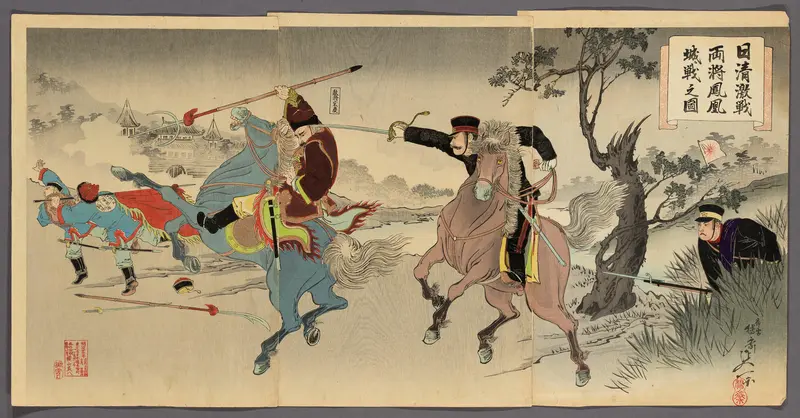
Sino-Japanese War: Two Generals at the Battle of Fenghuangcheng (Nisshin gekisen ryosho Hoojo sen no zu)
Yosai Nobukazu
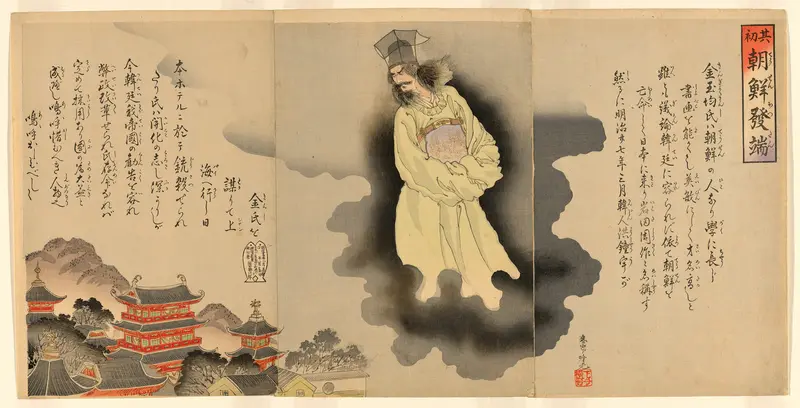
The Beginning of the Korean Incident (Sono hajime Chosen hottan)
Adachi Ginko
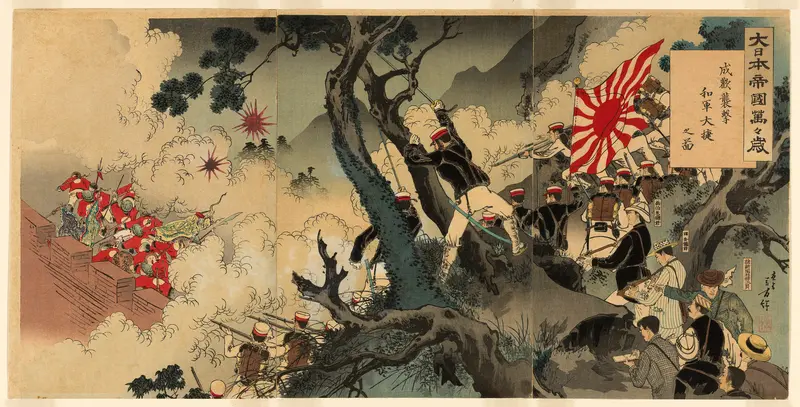
Long Live the Great Japanese Empire! A Great Victory for Our Troops in the Assault on Songhwan (Dai Nihon teikoku banbanzai, Seikan shugeki waga gun taisho no zu)
Mizuno Toshikata
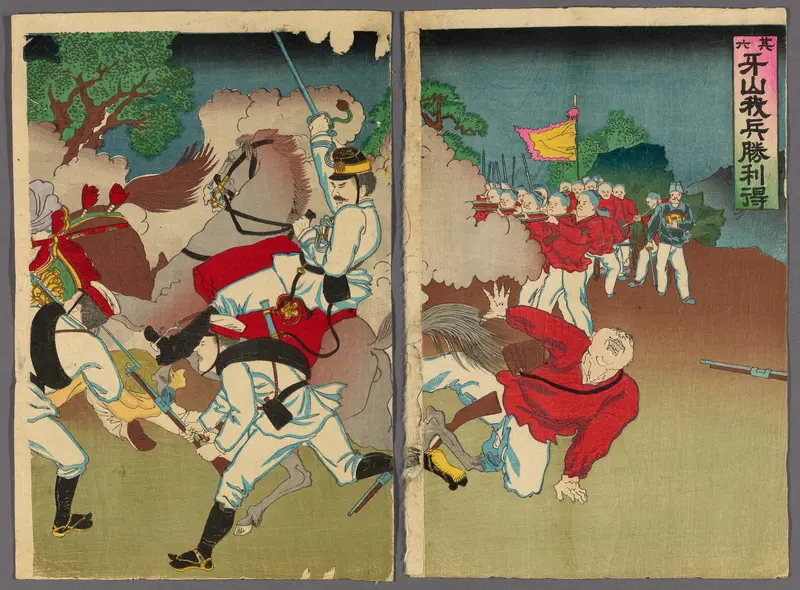
No. 6: Our Troops Gain Victory at Asan (Sono roku, Gazan waga hei shori o eru)
Unknown
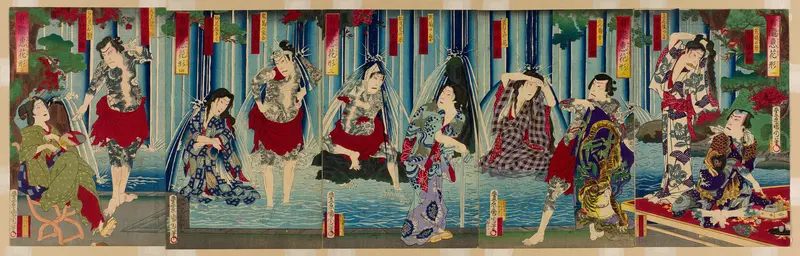
Kabuki Stars Before a Gracious Waterfall (Arigataki megumi no hanagata)
Toyohara Kunichika
Sino-Japanese War
Kobayashi Ikuhide
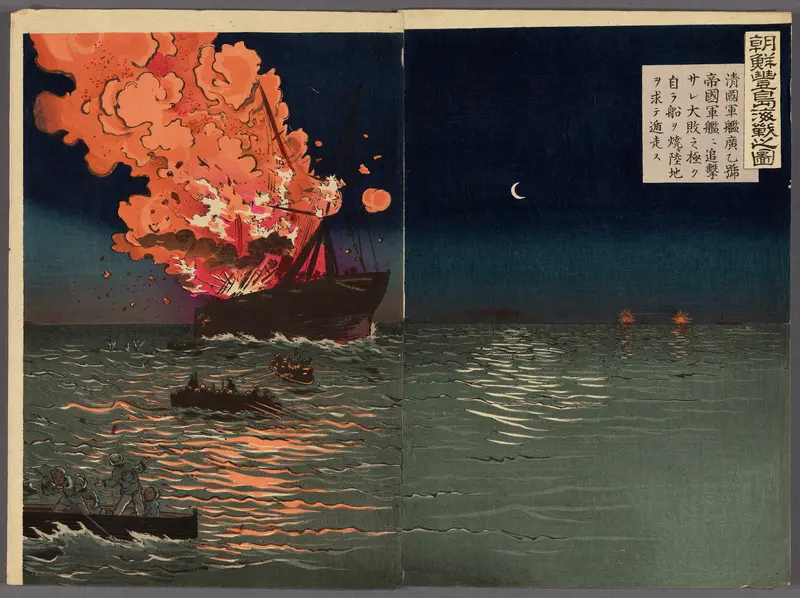
The Naval Battle of Pungdo in Korea (Chosen Hoto kaisen no zu)
Kobayashi Kiyochika
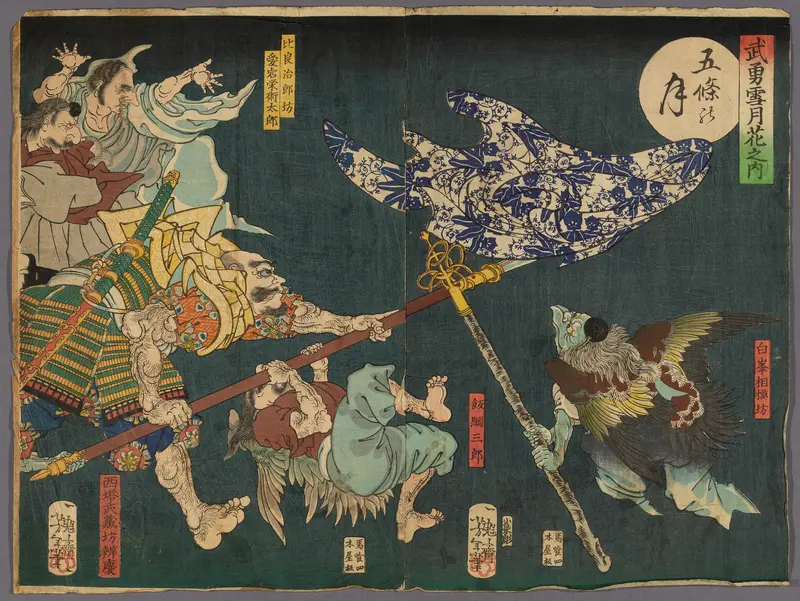
The Moon over Gojo Bridge (Gojo no tsuki), from the series "Heroes for the Snow, Moon, and Flowers (Buyu setsugekka)"
Tsukioka Yoshitoshi
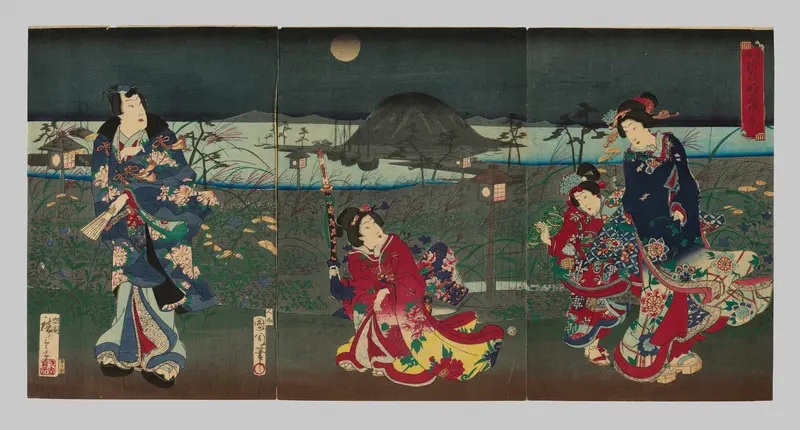
Genji Drawn in Different Styles: View of Akashi Bay (Kakiwake Genji, Akashi ura no kei)
Toyohara Kunichika
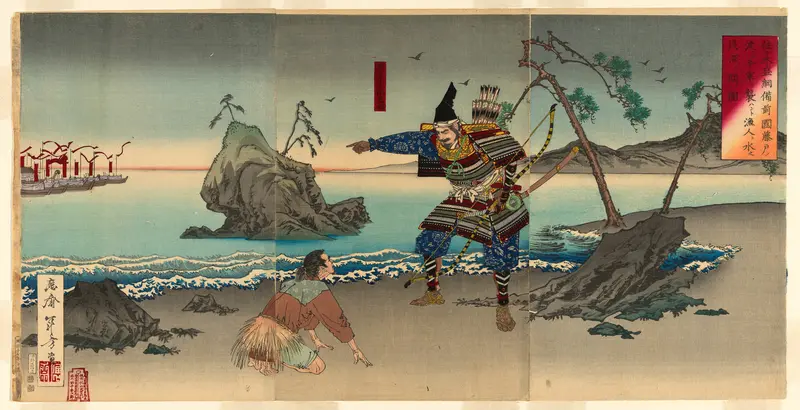
Sasaki Moritsuna Asking Fisherman to Reveal the Shallows Where His Troops can Cross and Attack the Taira Forces at Fujito in Bizen Province (Sasaki Moritsuna Bizen no kuni Fujito no watari ni Heigun o osowanto gyojin ni mizu no senshin o tou zu)
Mizuno Toshikata
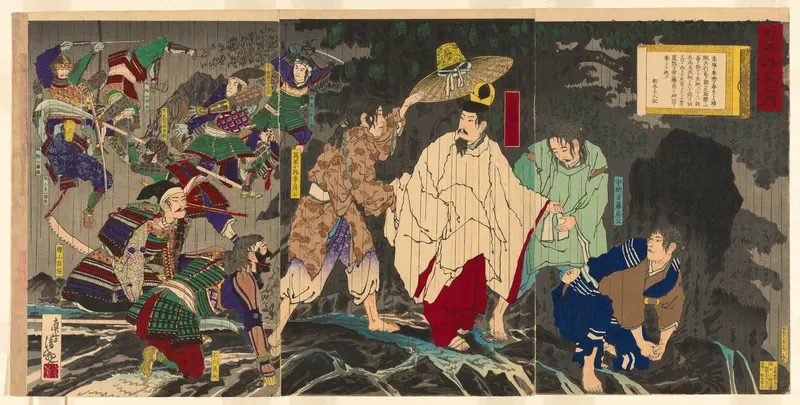
Escape of Emperor Godaigo, from the series "The Unofficial History of Japan (Nihon gaishi no uchi)"
Kobayashi Kiyochika
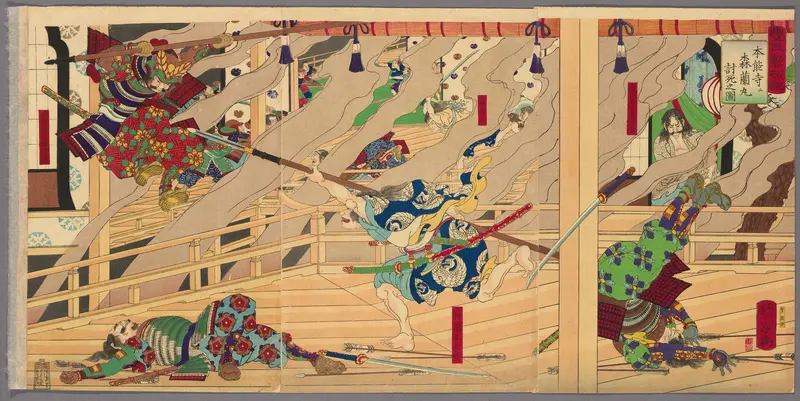
Mori Ranmaru Killed in Battle at Honnoji (Honnoji ni Mori Ranmaru uchijini no zu), from the series "The Record of Toyotomi's Achievements (Toyotomi kunkoki)"
Utagawa Yoshifuji
Two Actors in a Drama
Torii Kiyomasu I
Crossing Nihonbashi Bridge
Katsukawa Shunchô
Kintaro, Urashimataro, and Momotaro, from the triptych "Set of Three Sake Cups for the First Month (Tarozuki mitsugumi sakazuki)"
Kitagawa Utamaro
Mount Goten, from the illustrated book "Statue of Fugen (Fugen-zo)"
Kitagawa Utamaro
The First Calligraphy of the New Year (Kissho hajime), from the illustrated book "Colors of the Triple Dawn (Saishiki mitsu no asa)"
Torii Kiyonaga
The First Garments of the New Year (Kiso hajime), from the illustrated book "Colors of the Triple Dawn (Saishiki mitsu no asa)"
Torii Kiyonaga
The First Archery Practice of the New Year (Yumi hajime), from the illustrated book "Colors of the Triple Dawn (Saishiki mitsu no asa)"
Torii Kiyonaga
The First Horseback Ride of the New Year (Uma norizome), from the illustrated book "Colors of the Triple Dawn (Saishiki mitsu no asa)"
Torii Kiyonaga
Opening the Storehouse (Kurabiraki), from the illustrated book "Colors of the Triple Dawn (Saishiki mitsu no asa)"
Torii Kiyonaga
Five Musicians (Gonin bayashi)
Torii Kiyonaga
A pair of ducks by a lotus pond
Kobayashi Kiyochika
Taking Food to Rice Planters
Kubo Shunman
Gathering spring flowers
Kubo Shunman
Clearing Breeze from a Fan (Ogi no seiran)
Kitao Shigemasa
Minamoto Yorimitsu in Mount Ashigara (Minomoto Yorimitsu Ashigarayama iri no zu)
Ichieisai Yoshitsuya
The actors Nakamura Shikan IV as Fuwa Banzaemon, Nakamura Fukusuke IV as the Maid, and Kataoka Gado III as Nagoya Sanzaburo
Toyohara Kunichika
Manchurian Horsemen Scouting from a Distance the Japanese Camp Near Sauhoku (Sokako fukin Nichijin enbo Manshu kihei iso shutsujin no zu)
Taguchi Beisaku
Third Illustration of the Great Victory of Our Forces on the Yellow Sea (Kokai ni okeru wagagun no taisho, dai san zu)
Kobayashi Kiyochika
Telegram from Korea (Chosen denpo)
Unknown
Our Officers Scouting the Enemy Camp in a Snow Storm (Oyuki o okashite waga shoko tanshin tekichi o teisatsu no zu)
Taguchi Beisaku
The Army and Navy Attack and Capture Weihaiwei (Ikaiei rikukaigun kogeki senryo zu)
Kobayashi Ikuhide
Major General Odera Fighting Fiercely at the Hundred Foot Cliff in Weihaiwei (Ikaiei hyakusekigaisho ni Odera shosho funsen su)
Kobayashi Kiyochika
The Naval Battle and Capture of Haiyang Island (Kaiyoto senryo kaisen no zu)
Ogata Gekko
Fierce Fighting at Anseong Crossing in Korea (Chosen Anjo watashi no gekisen no zu)
Utagawa Kokunimasa
The Occupation of the Battery at Port Arthur (Ryojunko hodai nottori no zu)
Ogata Gekko
Lieutenant Commander Sakakibara Fighting Bravely to the South of Ximucheng (Takubokujo nan ni oite Sakakibara shosa funsen no zu)
Adachi Ginko
Long Live the Japanese Navy and Army! The Great Battle near Weihaiwei (Nihon kairiku banzai, Ikaiei fukin daigekisen no zu)
Kobayashi Ikuhide
Kabayama, the Chief of Naval Staff, Attacking Enemy Ships from onboard Saikyomaru (Kabayama gunreibucho Saikyomaru o motte tekikan ni ataru)
Adachi Ginko
Soldiers Fighting Furiously at Fenghuangcheng (Hoojo ni shoshi funto no zu)
Ogata Gekko
The First Division Advancing on Fengtienfu (Daiichigun Hotenfu shingeki no zu)
Ogata Gekko
Advancing across the Ansong River at the Battle of Asan (Gazan gekisen Anjo no watashi shingeki no zu)
Kobayashi Kiyochika
Captain Matsuzaki Bravely Fights at the Great Battle of Songhwan (Seikan no Gekissen, Matsuzaki Taii funyu no zu)
Migita Toshihide
Capturing the Fortress at Niuzhuang (Gyusojo senryo)
Hashimoto (Yoshu) Chikanobu
Great Victory of Our Troops at the Fierce Battle of the Ansong Ford (Anjo no watashi waga gun taisho no zu)
Migita Toshihide
Fierce Naval Battle Off Takushan (Daikosan oki kaigun no gekisen)
Migita Toshihide
Great Victory of Our Forces at the Battle of Pyongyang (Heijo gekisen waga gun taisho no zu)
Yosai Nobukazu
Sino-Japanese War: Two Generals at the Battle of Fenghuangcheng (Nisshin gekisen ryosho Hoojo sen no zu)
Yosai Nobukazu
The Beginning of the Korean Incident (Sono hajime Chosen hottan)
Adachi Ginko
Long Live the Great Japanese Empire! A Great Victory for Our Troops in the Assault on Songhwan (Dai Nihon teikoku banbanzai, Seikan shugeki waga gun taisho no zu)
Mizuno Toshikata
No. 6: Our Troops Gain Victory at Asan (Sono roku, Gazan waga hei shori o eru)
Unknown
Kabuki Stars Before a Gracious Waterfall (Arigataki megumi no hanagata)
Toyohara Kunichika
Sino-Japanese War
Kobayashi Ikuhide
The Naval Battle of Pungdo in Korea (Chosen Hoto kaisen no zu)
Kobayashi Kiyochika
The Moon over Gojo Bridge (Gojo no tsuki), from the series "Heroes for the Snow, Moon, and Flowers (Buyu setsugekka)"
Tsukioka Yoshitoshi
Genji Drawn in Different Styles: View of Akashi Bay (Kakiwake Genji, Akashi ura no kei)
Toyohara Kunichika
Sasaki Moritsuna Asking Fisherman to Reveal the Shallows Where His Troops can Cross and Attack the Taira Forces at Fujito in Bizen Province (Sasaki Moritsuna Bizen no kuni Fujito no watari ni Heigun o osowanto gyojin ni mizu no senshin o tou zu)
Mizuno Toshikata
Escape of Emperor Godaigo, from the series "The Unofficial History of Japan (Nihon gaishi no uchi)"
Kobayashi Kiyochika
Mori Ranmaru Killed in Battle at Honnoji (Honnoji ni Mori Ranmaru uchijini no zu), from the series "The Record of Toyotomi's Achievements (Toyotomi kunkoki)"
Utagawa Yoshifuji
« Previous
Next »
Prints Wall Art | High-Resolution Digital Art | Archive Lane