Gallery-wrapped, ready to hang
Stretched over a 38 mm (1.5 in) bar and delivered stretched — there is nothing to assemble and no separate frame to buy.
Sizes are matched to this artwork. Formats that aren’t its exact shape are centred and trimmed to fit — every size shows how much.
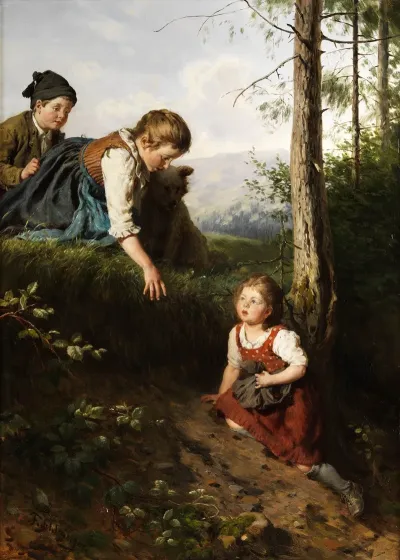
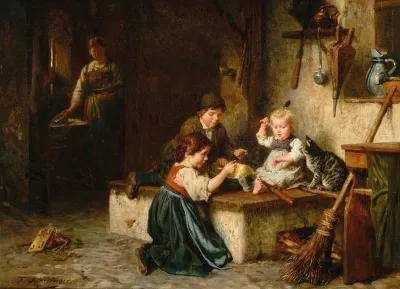
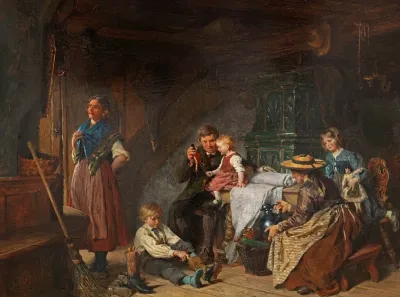
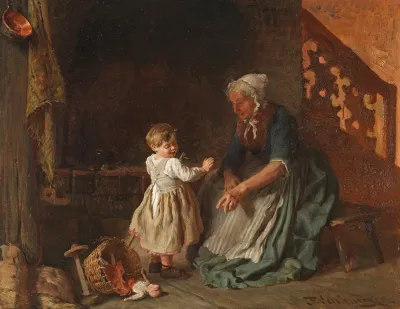
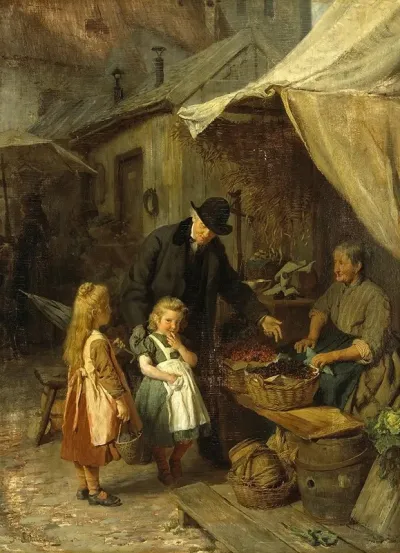
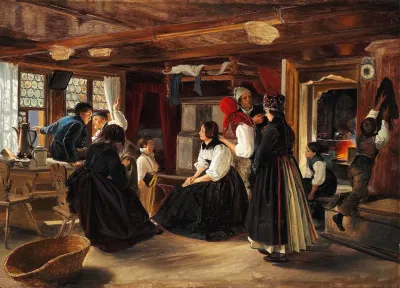
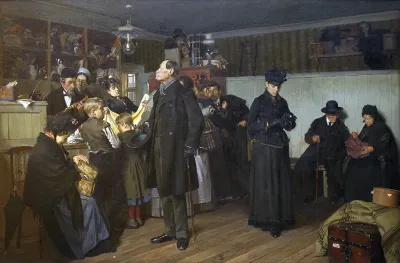
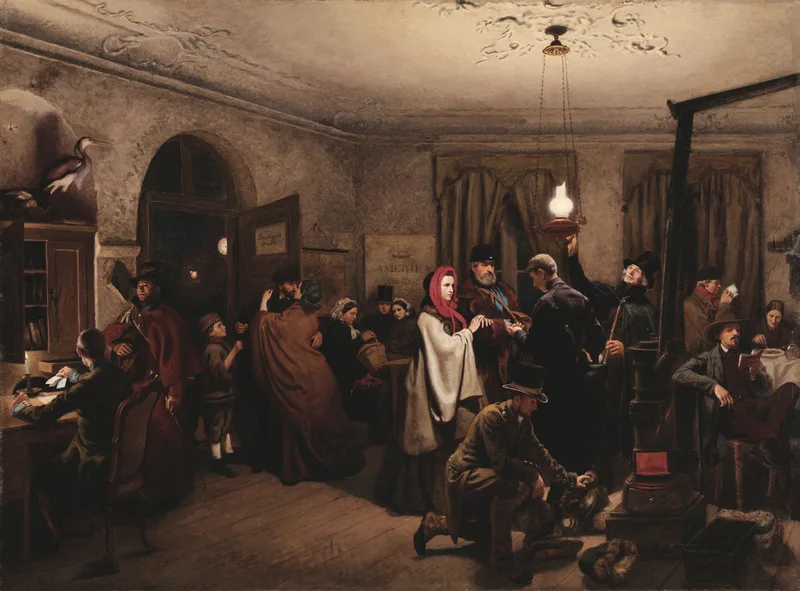
The Post Office is a painting by Felix Schlesinger (1833–1910), dated 1859. The artist is catalogued as German. This reproduction is based on the copy in the Wikimedia Commons, and the file offered here measures 6000 × 4434 px (6.8 MB). Catalogued under Figurative and Realism, in landscape format. Archive Lane holds 54 works by Felix Schlesinger, a German artist.
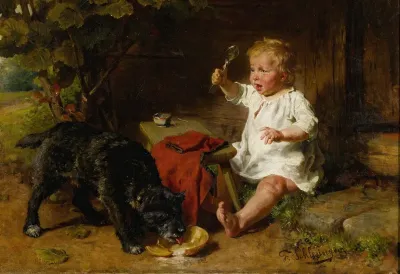
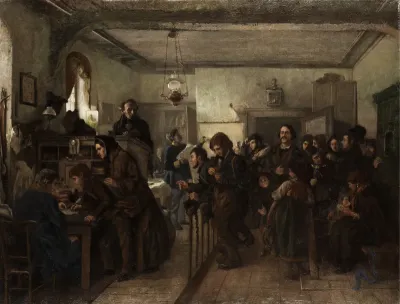
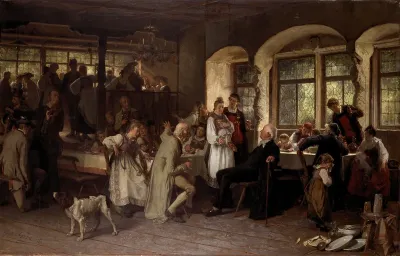
The German genre painter Felix Schlesinger was an important representative of the Düsseldorf School. He grew up in a family of painters, which is why he also came into contact with artistic themes in his family environment. In 1848 he began his training with Friedrich Heimerdinger in Hamburg, where he was born and grew up. Heimerdinger was known for his still lifes and trompe-l'œil painting. Behind this term is an illusionistic painting, which creates a 3-D effect by stylistic means of perspective. This style was often used for elaborate art and ceiling paintings. Schlesinger later trained in Antwerp, Düsseldorf and Paris. These cities were considered the artistic centers of figurative painting at the time. Br/> In the early 1860s Felix Schlesinger lived and worked in Frankfurt am Main. Later he came to Munich and settled there permanently. He regularly exhibited his paintings in his new home, but he also found an interested public in Dresden, Berlin and Vienna. As a genre painter, the artist devoted himself to a central theme: the life of families in the countryside. He often depicted families and children. Research shows that little is known about the artist's private life, except for the works he left to posterity. But the family motifs in the pictures suggest that the artist himself was a husband and family man. Perhaps his wife and children can be seen in some of his paintings?
The Post Office is free to preview at web resolution. The original high-resolution file is a one-time purchase, or included with an Archive Lane membership (up to 1,000 high-resolution downloads per day) — and the artwork can also be ordered as a made-to-order print.
The Post Office, a painting by Felix Schlesinger (1833–1910), dated 1859. The source copy is at Wikimedia Commons; the file offered here is 6,000 × 4,434 pixels. It is filed under Realism within German art. The work is in the public domain, so the full-resolution file can be downloaded and printed without licence restrictions.
View all artworks by Felix Schlesinger→
| Artist | Felix Schlesinger |
| Year | 1859 |
| Medium | Painting |
| Origin | Wikimedia Commons |
| Category | Figurative |
| Style | Realism |
| Color | Brown |
| Resolution | 6000x4434 |
| Orientation | Landscape |
| File Type | High-resolution JPG |
| Source | Public domain, restored by Archive Lane |
| License | Personal & commercial use, no attribution required |
| Delivery | Instant digital download; prints made to order and shipped locally |
| SKU | 662192 |
Instant digital delivery.Download the original high-resolution file immediately with your membership — no shipping, no waiting.
Prints.Every print is made to order at the production partner closest to you, then shipped directly. Typical delivery to the US is 5–11 business days depending on the material — framed pieces take the longest.
This public domain artwork is offered as an original high-resolution digital download.
Stretched over a 38 mm (1.5 in) bar and delivered stretched — there is nothing to assemble and no separate frame to buy.
The outer strip of the artwork is mirrored around the sides, so the full picture stays on the face of the canvas instead of disappearing around the corner.
A heavy 400 gsm canvas with a matte woven surface. There is no glass in front of it, so the print stays readable from any angle and in any light.
Every room view above is drawn to the real scale of the size you selected, measured against the furniture in the photograph — so the wall space is a fair estimate, not decoration.