Mirrored edge, nothing cropped
The outer strip of the artwork is mirrored around the sides, so the full picture stays on the face of the canvas instead of disappearing around the corner.
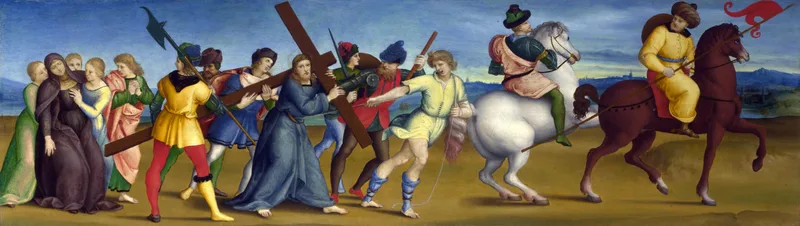
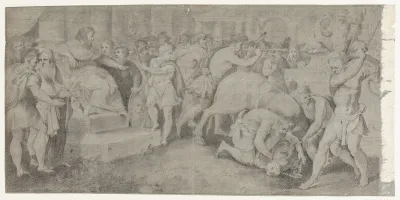
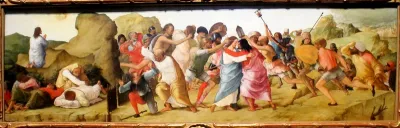
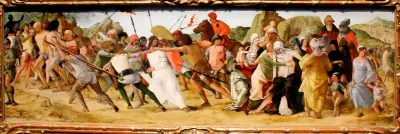
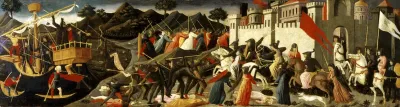
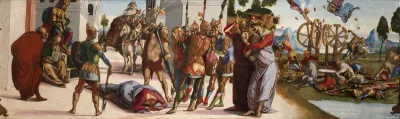
Raphael (1483–1520) made The Procession to Calvary, a painting, made in 1504. The high-resolution scan comes from Wikimedia Commons and measures 6,000 × 1,698 pixels. It is filed under Paintings and Renaissance within Italian art. This is a public-domain work: free to preview, available in full resolution and as a print.
| Artist | Raphael |
| Year | 1504 |
| Medium | Painting |
| Origin | Wikimedia Commons |
| Category | Paintings |
| Style | Renaissance |
| Resolution | 6000x1698 |
| Orientation | Landscape |
| File Type | High-resolution JPG |
| Source | Public domain, restored by Archive Lane |
| License | Personal & commercial use, no attribution required |
| Delivery | Instant digital download |
| SKU | 920866 |
Instant digital delivery.Download the original high-resolution file immediately with your membership — no shipping, no waiting.
The outer strip of the artwork is mirrored around the sides, so the full picture stays on the face of the canvas instead of disappearing around the corner.

A heavy 400 gsm canvas with a matte woven surface. There is no glass in front of it, so the print stays readable from any angle and in any light.
Everything you need to know about your canvas before you order.
The Procession to Calvary is a painting by Raphael (1483–1520), dated 1504. The artist is catalogued as Italian. The high-resolution file measures 6000 × 1698 px (2.2 MB). It is filed under Paintings and Renaissance, in landscape format. Archive Lane holds 299 works by Raphael, an Italian artist.
Raffaello Sanzio da Urbino, now generally known in English as Raphael, was an Italian painter and architect of the High Renaissance. His work is admired for its clarity of form, ease of composition, and visual achievement of the Neoplatonic ideal of human grandeur. Together with Leonardo da Vinci and Michelangelo, he forms the traditional trinity of great masters of that period.